
Length of Incarceration and Recidivism is the seventh publication in the Commission’s recent series on recidivism. This study examines the relationship between length of incarceration and recidivism, specifically exploring three potential relationships that may exist: incarceration as having a deterrent effect, a criminogenic effect, or no effect on recidivism. There are links to this report and other reports – Found HERE
Category: CRJ302 Community & CJ
You Can’t Police Your Way to Public Health | The Nation
Criminalizing social-distancing violations threatens the very communities most vulnerable to the pandemic.
— Read on www.thenation.com/article/society/police-coronavirus/
Paterson police-involved shooting – Analysis by Professor Peter Moskos
You can’t see the original content unless you have a subscription to the newspaper that it is reported in.
Nice analysis. Check out more of his blog too.
https://copinthehood.com/paterson-police-involved-shooting-2/
Police training reduced complaints and use of force against civilians
Police training reduced complaints and use of force against civilians
— Read on phys.org/news/2020-04-police-complaints-civilians.html
See report HERE
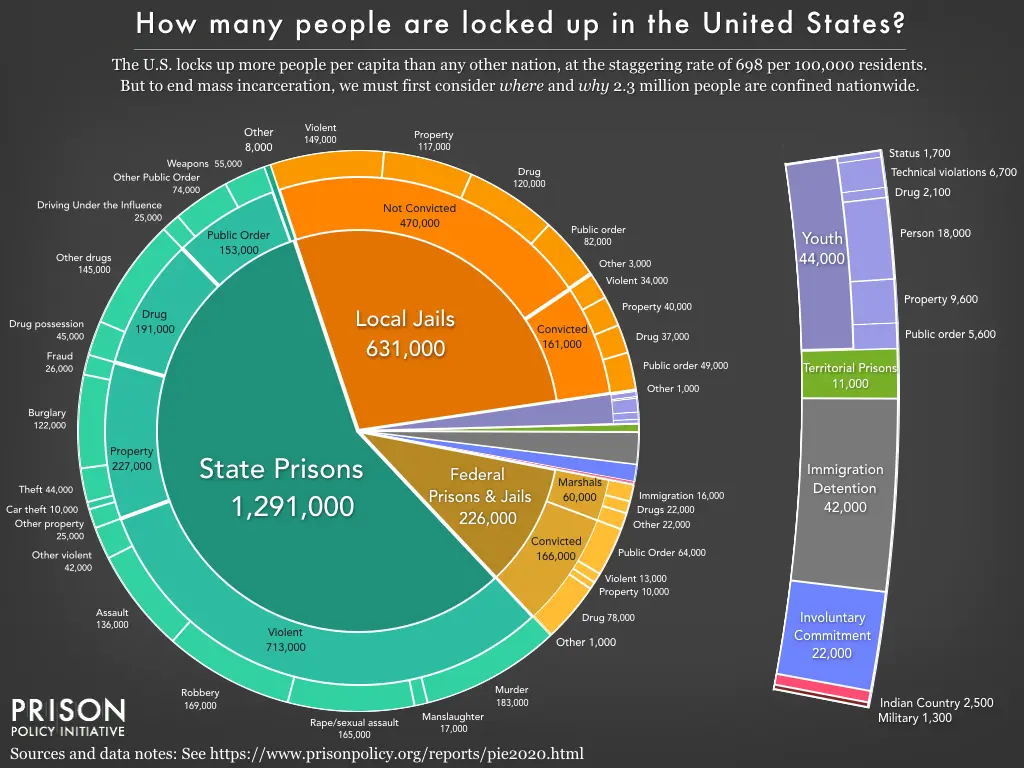
Mass Incarceration: The Whole Pie 2020
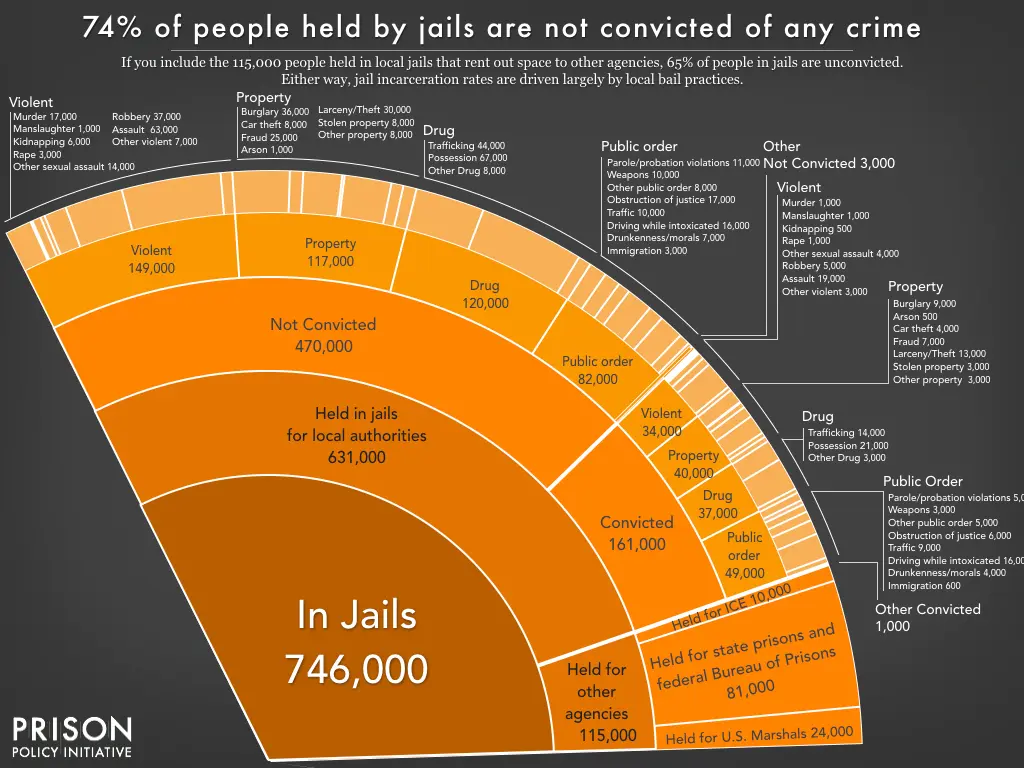
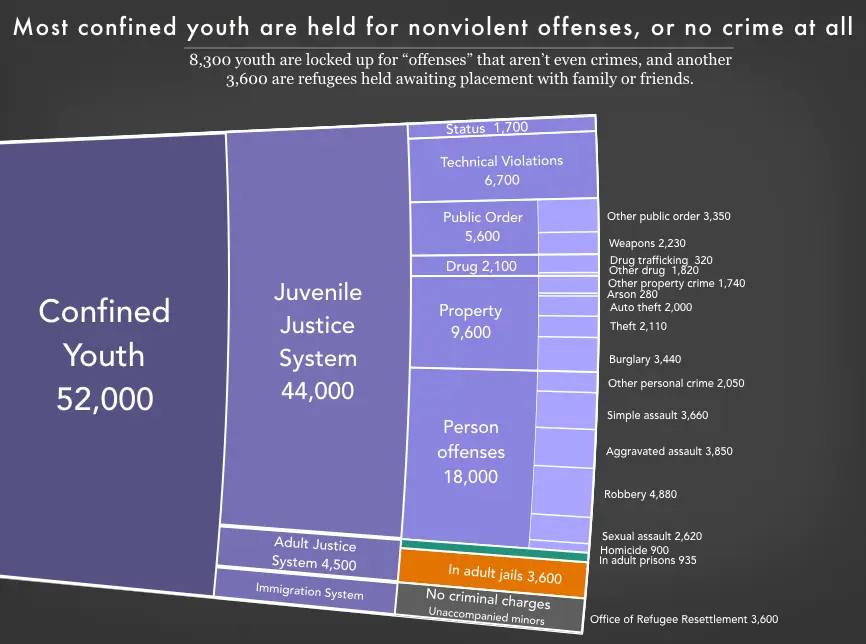
This report offers some much needed clarity by piecing together this country’s disparate systems of confinement. The American criminal justice system holds almost 2.3 million people in 1,833 state prisons, 110 federal prisons, 1,772 juvenile correctional facilities, 3,134 local jails, 218 immigration detention facilities, and 80 Indian Country jails as well as in military prisons, civil commitment centers, state psychiatric hospitals, and prisons in the U.S. territories.
This report provides a detailed look at where and why people are locked up in the U.S., and dispels some modern myths to focus attention on the real drivers of mass incarceration, including exceedingly punitive responses to even the most minor offenses.
Go to the webpage HERE
Politicians Still Say Longer Prison Sentences Prevent Gun Violence — But Do They
After every mass shooting, there is a demand for gun control and then…nothing seems to happen (or, gun laws are loosened). That pattern dates back four decades, to the early 1970s, when rising crime rates inspired legislators to introduce gun bills at the state and federal level……. see the article HERE
New York’s Latest Bail Law Changes Explained
Bail will be an option for more crimes, but the heart of the law remains intact.
New York’s new bail reform law had been in effect for a mere three months when the state legislature amended it in early April. The most significant change is that there are more situations where judges can impose cash bail. They will also have more discretion in setting bail and other conditions of pretrial release. The updates go into effect on July 1. See more HERE
There’s racial bias in our police systems. Here’s the overwhelming proof. – The Washington Post
This is a post from Radley Balko. Sometimes you can access the whole article sometimes you can’t it depends if you have have access to the Washington Post.
There a one key point to remember: Disproportionate is not Discrimination.
Even controlling for crime rates, class and income, racial bias infects every nook and cranny of our courts, prisons, jails and police stations.
— Read on www.washingtonpost.com/news/opinions/wp/2018/09/18/theres-overwhelming-evidence-that-the-criminal-justice-system-is-racist-heres-the-proof/
Policing in a Time of Pandemic – Improving Police
Georgetown Law: Innovative Policing Program Rosa Brooks and Christy Lopez April 10, 2020 ABSTRACT: “This white paper notes the novel law enforcement challenges created by COVID-19 and describes the different approach police must take in light of these challenges in order to serve their traditional publicsafety function. Traditional law enforcement practices such as stops, searches,…
— Read on improvingpolice.blog/2020/04/18/policing-in-a-time-of-pandemic/
We spoke to hundreds of prison gang members – here’s what they said about life behind bars
Gangs are still a significant reality in US prisons. But most inmates say that their power has been watered down, and they no longer rule facilities with an iron fist.
— Read on theconversation.com/we-spoke-to-hundreds-of-prison-gang-members-heres-what-they-said-about-life-behind-bars-132573

